Quick answer
App development cost in Pakistan depends on scope, not on the word "app". The number of screens, user roles, the admin panel, and integrations such as JazzCash, maps or chat set the hours. Hours times the vendor's rate, plus fixed store fees (US$25 for Google Play, US$99 a year for Apple), hosting and maintenance, gives your real total.
Key takeaways
- Quotes differ wildly because vendors price different scopes; a one-page scope makes quotes comparable.
- Fixed costs are small but real: US$25 once for Google Play and US$99 a year for the Apple Developer Program, as of November 2026.
- Estimate with hours x rate + fixed costs + a contingency, and ask every vendor for an hour breakdown per module.
- Flutter (3.47) and React Native (0.88) are both mature in 2026; pick the one your team can maintain, not the one with the loudest fans.
- Budget for maintenance from day one: Google raises its target API requirement every year, and unmaintained apps lose reach.
Why do app development quotes in Pakistan range from Rs 50,000 to millions?
The app development cost in Pakistan varies so much because two vendors quoting "an app" are rarely quoting the same thing. One may be pricing a template with your logo. Another may be pricing a custom app with an admin panel, payments, a rider app and a year of support. Until you fix the scope, you cannot compare the numbers.
The result is three familiar problems:
- Quotes you cannot compare. One line says "Android + iOS app, Rs 150,000". Another is a 20-page proposal. Neither tells you how many hours sit behind each feature.
- Apps that are never finished. The first 80% goes fast. Then payments, notifications and the admin panel turn out to be "extra", and the project stalls.
- Apps that are never updated. The app launches, the developer moves on, and two years later it no longer meets Google Play's requirements or works on new phones.
This guide shows you what drives the price, which costs are fixed, how to build your own estimate, and how to choose a mobile app development company in Pakistan without overpaying. We do not publish "average prices" here because we could not find a reliable, current source for them. Instead, you will learn to price your own scope.
What drives mobile app development cost in Pakistan?
Hours drive cost, and features drive hours. The biggest cost drivers are the number of screens, the number of user types, the admin panel behind the app, and each outside service the app connects to.
| Cost driver | Why it adds hours | Question to ask the vendor |
|---|---|---|
| Number of screens | Each screen needs design, building and testing on small and large phones. | "How many screens are in this quote, and which ones?" |
| User roles | A customer app, a rider app and a branch manager view are three products, not one. | "Which roles are included, and does each have its own login?" |
| Backend and admin panel | Someone has to add products, see orders and manage users. This web dashboard is often half the work. | "Is the admin panel included, and what can it do?" |
| Payments (JazzCash, Easypaisa, cards, COD) | Each gateway has its own merchant account, sandbox, callbacks and refund flow. | "Which gateways, and who opens the merchant accounts?" |
| Maps and location | Live tracking, delivery zones and address search all use paid map APIs. | "Which map features, and who pays the map bill?" |
| Chat and notifications | In-app chat needs real-time servers; push notifications need setup on both stores. | "Is chat custom-built or a third-party service?" |
| Offline mode | Saving data on the phone and syncing later is hard to get right, especially for field sales on patchy 4G. | "What works without internet, and how are conflicts handled?" |
| Languages | Urdu needs right-to-left layouts and different fonts. | "Is Urdu included, and is it full right-to-left?" |
| Platforms | Android only, iOS only, or both. Cross-platform tools reduce the gap but do not remove testing on both. | "Is iOS included, and who submits to the App Store?" |
An admin panel is the private website your team uses to run the app: add products, change prices, see orders and reply to customers. A backend is the server and database the app talks to. If a quote does not mention either, ask.
Android app development cost in Pakistan is often lower than iOS-plus-Android because most local customers use Android and you skip Apple's review and yearly fee. If your buyers include iPhone users, a cross-platform tool lets you cover both without doubling the work.
Which fixed costs come with every app?
Every published app has a few costs that do not depend on your vendor. They are small next to development, but they recur, so put them in your budget.
- Google Play: a one-time US$25 registration fee, according to Google's Play Console help. Google Play does not accept prepaid cards.
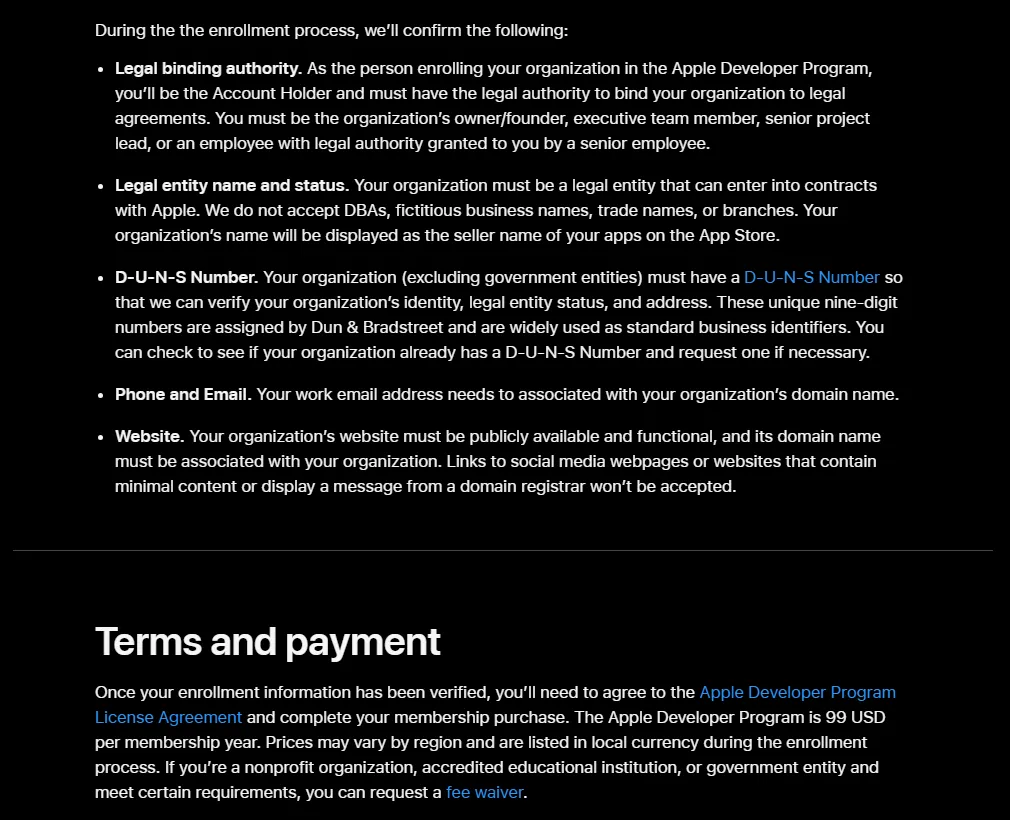
- Apple Developer Program: US$99 per membership year, and Apple says prices may be shown in local currency during enrolment, per its enrolment page. Organisations need a D-U-N-S number and a working website.
- Hosting and backend services: many apps start on a cloud service such as Firebase. Its pricing page lists a no-cost Spark plan, Cloud Messaging (push notifications) at no cost, and daily free quotas for its Firestore database before pay-as-you-go billing starts.
- Maps: Google Maps Platform bills per request. Its pricing page lists monthly free caps per service, such as 10,000 Dynamic Maps loads, after which you pay.
- Payment gateways: JazzCash, Easypaisa and card gateways charge per transaction. Rates differ by merchant agreement; see our payment gateway guide.
- Store commission: for physical goods and services such as food delivery or clothing, Google's Payments policy says Google Play's billing system must not be used, so you collect payment through your own gateway instead.
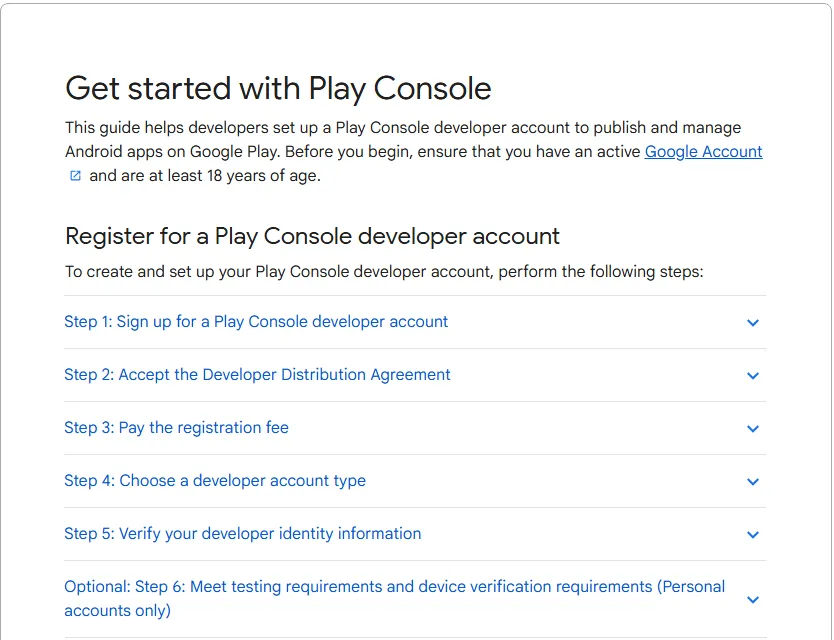
New personal Play Console accounts must also run a 14-day closed test with 12 testers before launch. That costs time rather than money; our Google Play 12 testers guide explains it.
How do you estimate app development cost yourself?
Use a simple formula: (hours per module x hourly rate) + fixed costs + a 15-20% contingency. The contingency covers the changes every project has. Ask each vendor to fill in the hours so you can see where the money goes.
Here is a hypothetical example for a small ordering app with a customer app (Android and iOS), an admin panel and JazzCash payments. The hours and the Rs 2,500 hourly rate are made up to show the method. They are not a quote and not a market average.
| Module (hypothetical) | Hours | At Rs 2,500/hour |
|---|---|---|
| UX and UI design, 12 screens | 60 | Rs 150,000 |
| Customer app, one cross-platform codebase | 240 | Rs 600,000 |
| Backend and API | 140 | Rs 350,000 |
| Admin panel (web) | 100 | Rs 250,000 |
| JazzCash integration and testing | 40 | Rs 100,000 |
| Push notifications | 16 | Rs 40,000 |
| Testing on real devices | 80 | Rs 200,000 |
| Project management and store submission | 60 | Rs 150,000 |
| Subtotal | 736 | Rs 1,840,000 |
| Contingency at 15% | Rs 276,000 | |
| Build estimate | Rs 2,116,000 |
Now change one input at a time. Drop iOS for launch and the testing and submission hours shrink. Add a rider app and you add a whole second app. This is why one vendor says Rs 300,000 and another says Rs 3 million: they are quoting different tables. If your project also needs a website, our website cost calculator helps you price that part.
A quick sense check
If a quote is far below others, ask which rows are missing. Admin panels, payment testing and store submission are the usual gaps. If a quote is far above others, ask which features you could move to a second phase.
Flutter vs React Native in 2026: which should you choose?
Both are mature, free, cross-platform frameworks in 2026, meaning one codebase runs on Android and iOS. Choose the one your developer team already knows well and can support for years. A cross-platform framework is a toolkit that lets developers write the app once instead of twice.
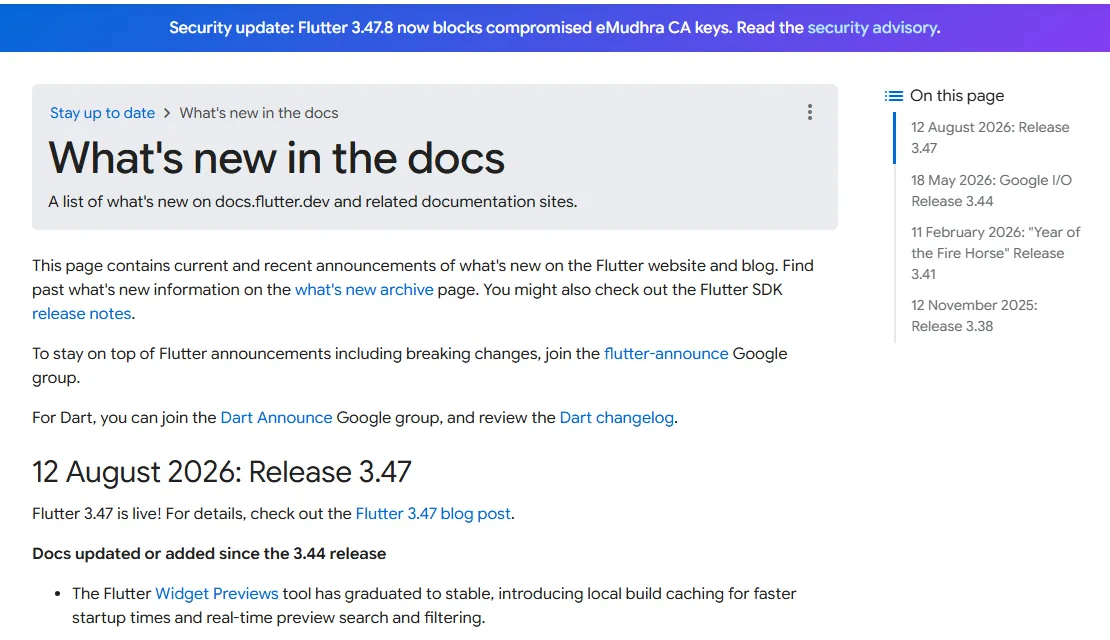
- Flutter is Google's open-source toolkit and uses the Dart language. Flutter draws its own interface, so screens look the same on every phone. The Flutter docs list release 3.47 on 12 August 2026 as the latest major release.
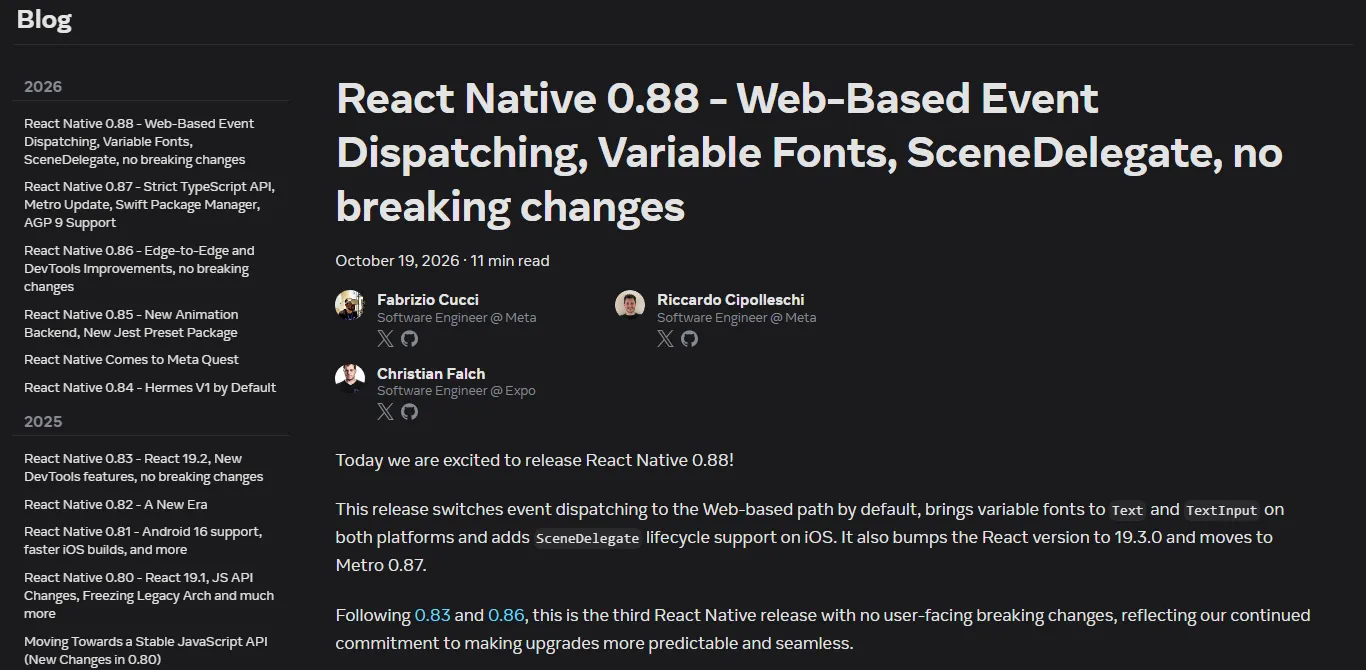
- React Native is Meta's framework and uses JavaScript or TypeScript with React, the same library many websites use. Its blog lists React Native 0.88 on 19 October 2026. The project says version 0.82 made the New Architecture the only runtime and 0.84 made the Hermes V1 engine the default.
How to decide
- Your website is built in React or Next.js: React Native lets the same developers and some shared code cover both.
- You want one custom-designed look everywhere: Flutter's own rendering makes that straightforward.
- You need heavy device features such as Bluetooth hardware, AR or complex background work: ask whether parts should be written natively in Kotlin (Android) or Swift (iOS).
- You will hire in Pakistan later: check how many developers you can find locally for each, and whether your vendor will hand over clean, documented code.
Either way, the framework matters less than the scope, the testing and the maintenance plan.
How to plan and buy an app in Pakistan: step by step
Follow these steps before you sign anything. They turn a vague idea into quotes you can compare and a contract you can enforce.
- Write a one-page scope. List who uses the app (customer, rider, staff), the five to ten things each must do, the payment methods (COD, JazzCash, Easypaisa, card), and the languages. Done when: someone outside your business can read it and explain the app back to you. Common mistake: writing "like Daraz" or "like foodpanda" instead of listing features.
- Cut it to an MVP. An MVP (minimum viable product) is the smallest version that solves the main problem for real customers. Mark each feature "launch" or "phase 2". Loyalty points, chat and referral codes can usually wait. Done when: the launch list fits on half a page.
- Get a clickable prototype. Pay for design first: a clickable mock-up in a design tool such as Figma. Show it to five customers and your staff. Changing a drawing is cheap; changing code is not. Done when: users can complete the main task in the prototype without help.
- Choose the stack with your vendor. Agree on Flutter, React Native or native code, the backend, and where it is hosted. Write the choice into the contract. Common mistake: letting the vendor use a closed, in-house builder that only they can edit.
- Send the same scope to three to five vendors. Ask each for hours per module, the team, the timeline and what is excluded. Score them with the table in the next section.
- Sign a milestone-based contract. Pay in parts tied to things you can test: approved designs, a working build on your phone, payments working in the sandbox, store approval. Hold back a final 10-15% until launch plus a short bug-fix period. Done when: every payment has a matching, testable deliverable.
- Own your code and accounts. The Play Console account, Apple developer account, Firebase or server, domain and code repository should all be in your business's name, with the vendor invited as a user. The contract should assign the intellectual property to you on payment. Common mistake: the app is published on the developer's personal account, so you cannot move it later.
- Plan launch and maintenance before you launch. Agree a monthly or yearly support fee for bug fixes, OS updates and store requirement changes. Google's target API rules are a good example: from 31 August 2026, new apps and updates must target Android 16, and existing apps targeting Android 14 or lower can only reach new users on older Android versions. Done when: a named person is responsible for updates every year.
How do you compare a mobile app development company in Pakistan?
Score each vendor on the same criteria, out of 5, and multiply by a weight. Price is one row, not the whole decision.
| Criterion | Weight | What a 5 looks like |
|---|---|---|
| Scope fit and hour breakdown | x3 | Every feature in your scope has hours; exclusions are listed. |
| Relevant live apps | x3 | You can install two or more of their apps from the Play Store and they work well. |
| Ownership terms | x3 | Accounts and code in your name; IP assigned to you in writing. |
| Price and payment schedule | x2 | Clear milestones; no large payment before you see working software. |
| Maintenance offer | x2 | Written support terms with response times and a yearly update plan. |
| Communication | x1 | One named project manager; weekly demos. |
Call at least one past client of each finalist. Our article on red flags when hiring a digital agency lists more warning signs.
What mistakes make apps cost more than planned?
- No admin panel in the quote. Without it, your staff cannot add products or see orders, and you pay again later.
- Paying most of the fee upfront. You lose your leverage if the project stalls at 80%.
- Building every idea at once. Launch the MVP, watch how customers use it, then fund phase 2 from real data.
- Testing only on the developer's phone. Ask for testing on low-cost Android phones and slow mobile data, which is what many of your customers use.
- No analytics. Without event tracking you cannot tell which screens lose customers. Set up analytics before launch so you can judge results.
- No maintenance budget. Store rules, payment SDKs and phone operating systems change every year. An app nobody updates slowly stops working.
Your app budgeting checklist
- One-page scope written and shared with your team.
- Features split into "launch" and "phase 2".
- Clickable prototype tested with five real users.
- Three to five quotes with hours per module.
- Vendors scored with the weighted table.
- Fixed costs listed: Google Play US$25, Apple US$99 a year (if iOS), hosting, maps, payment fees.
- 15-20% contingency added.
- Contract with milestones, IP assignment and accounts in your name.
- Maintenance plan with a yearly review of store requirements.
How Digitt Hype can help
Our app development team scopes, designs and builds Android and iOS apps with an hour-by-module estimate, milestone payments and all accounts set up in your business's name. We work with e-commerce, healthcare, education and startup teams. Send us your one-page scope through our contact page and we will reply with a breakdown you can compare.
Frequently asked questions
How much does it cost to make an app in Pakistan?
It depends on scope. Multiply the hours for each module (design, app, backend, admin panel, payments, testing) by the vendor's hourly rate, then add fixed costs such as Google Play's US$25 fee and Apple's US$99 yearly fee, plus a 15-20% contingency. Ask every vendor for an hour breakdown so quotes are comparable.
Is Android app development cheaper than iOS in Pakistan?
Usually, because you only build, test and submit for one platform, and Google Play charges a one-time US$25 fee instead of Apple's US$99 per year. If some of your customers use iPhones, a cross-platform framework such as Flutter or React Native can cover both platforms from one codebase.
Should I choose Flutter or React Native in 2026?
Both are mature in 2026: Flutter 3.47 shipped in August and React Native 0.88 in October. Choose React Native if your team already works in React for the web, and Flutter if you want one custom look on every phone. The bigger factor is whether your team can maintain the app for years.
What does app maintenance include?
Bug fixes, updates for new Android and iOS versions, payment SDK updates, security patches and store requirement changes. For example, Google required new apps and updates to target Android 16 from 31 August 2026. Agree on a written support plan with response times before launch rather than after something breaks.
Who should own the app's code and store accounts?
Your business should. Open the Google Play Console, Apple developer account, hosting and code repository in your business's name, and invite the developer as a user. Put an intellectual property assignment in the contract. This lets you change vendors later without losing your app, reviews or customers.
Sources 9
- Play Console Help: Get started with Play Console (registration fee)
- Apple Developer Program: Enrollment requirements and fee
- Play Console Help: Payments policy
- Firebase pricing plans
- Google Maps Platform core services pricing
- Flutter docs: What's new (Release 3.47)
- React Native blog (0.88 release)
- React Native 0.84: Hermes V1 by default
- Android Developers: Target API level requirements
Numbers not matching your dashboard?
That gap is worth an hour of someone’s time. Tell us what you see and we will look at it with you.