Quick answer
Food delivery apps in Pakistan, led by foodpanda, bring restaurants new customers but charge commission (foodpanda's average was reported at 25% in 2025) and keep the customer data. The fix is not to quit them. Keep them for discovery and add your own channel: an ordering website, WhatsApp ordering and Google's "Order online" link.
Key takeaways
- foodpanda is the dominant aggregator; Dawn reported an average 25% commission in 2025, varying with order volume.
- Uber agreed in July 2026 to buy foodpanda's parent, Delivery Hero; the deal is expected to close in the second half of 2027, subject to approvals.
- Use aggregators to find new customers, then move repeat customers to a direct channel you own.
- A direct channel can be simple: an ordering website, a WhatsApp catalog and a Google Business Profile "Order online" link.
- Compare margins with your own numbers per order, including riders, payment fees and marketing, before moving volume.
Which food delivery apps in Pakistan matter for restaurants in 2026?
Among food delivery apps in Pakistan, foodpanda is the clear market leader in 2026, and most restaurants in Lahore, Karachi and Islamabad list on it. Smaller local platforms exist, but their reach varies by city, so check which ones actually serve your area before signing up.
- foodpanda entered Pakistan in 2016 and belongs to Germany's Delivery Hero. A September 2025 Dawn report said it was active in 35 cities for food delivery and 12 for groceries, and quoted an average commission of 25%, varying with order volume.
- Ownership news: on 16 July 2026, Uber agreed to buy Delivery Hero in a deal valued at US$14.8 billion, as reported by the Irish Times. Nukta reported that the deal is expected to close in the second half of 2027. Nobody has announced what it means for restaurant terms in Pakistan, so do not plan around rumours.
- Careem announced in June 2025 that it would end ride-hailing in Pakistan and was building an "Everything App" covering food, groceries and payments, according to ProPakistani. That report gave no launch date.
- Smaller platforms such as Cheetay have operated in selected cities for years. Ask them for current coverage and terms in writing.
Commission has been a sore point for a long time. In 2020, the All Pakistan Restaurant Association held a three-day boycott of foodpanda over commission increases, exclusivity clauses and rules on restaurant-run delivery, as Dawn reported. The same report said rates depended on bargaining power: large chains paid far less than small eateries.
Food delivery apps in Lahore, Karachi and Islamabad: check your own area
Coverage, competition and delivery times differ by city and even by neighbourhood. Before you plan anything, open each delivery app as a customer, set the address to your restaurant's street, and note three things: which platforms deliver there, how many competitors in your category appear on the first screen, and the delivery fee and time they show. Repeat it for the two or three areas where most of your orders come from. This ten-minute exercise tells you where an aggregator brings customers you could not reach yourself, and where your regulars could just as easily order from you directly.
Why do aggregator commissions hurt restaurant margins?
Commission comes off the full order value, before your food, rent and staff costs. A restaurant with a thin margin can end up making little or nothing on some delivery orders, especially when it also funds discounts.
- Commission plus discounts. Platforms run deals and campaigns. When the restaurant pays part of the discount, the real cost of an order is the commission plus your share of the discount.
- The platform owns the customer. On an aggregator, the customer's phone number, order history and favourite dishes sit with the app. You cannot send them a new-menu message on WhatsApp or invite them to a loyalty programme.
- Your brand gets one tile among hundreds. Customers search "biryani" or "burger" and pick whoever is cheapest or fastest today.
- Your prices go up. Many restaurants raise app prices to cover commission, which makes them look expensive next to competitors.
None of this means aggregators are bad. They bring customers you would never reach alone, and they handle riders, payments and support. The problem is relying on them for every order, including the regulars who would happily order from you directly.
How can you check what aggregators really cost you?
Work out your effective take rate: everything the platform keeps, divided by the order value. Do it for one month before changing anything.
- Download last month's payout statements from your partner portal.
- Add up gross order value, commission, your share of discounts, and any other deductions (such as advertising or packaging fees).
- Divide total deductions by gross order value. That is your effective take rate.
- Count how many orders came from repeat customers, if the portal shows it. These are the customers most likely to order directly.
- Read your contract for exclusivity, price-parity or own-delivery clauses. Ask the platform in writing if anything is unclear.
If your effective take rate is well above the headline commission, discounts are probably the reason. That is useful to know before your next campaign.
How to build your own online food ordering system: step by step
Start small: one ordering link that works on a phone, connected to your kitchen, and then promote it to customers who already know you. You do not need a big app on day one.
- Keep the aggregators for discovery. Stay listed, but treat the platform as a place to meet new customers. Put a printed card in every delivery bag with your WhatsApp number and ordering link (if your contract allows it). Done when: you know which channel each order came from. Common mistake: leaving the platform overnight and losing volume before your own channel is ready.
- Launch an ordering website or PWA. A PWA (progressive web app) is a website that customers can add to their home screen and use like an app, without a Play Store download. It needs a menu, cart, delivery address, payment choice and order confirmation. Done when: a customer on a mid-range Android phone and mobile data can order in under two minutes.
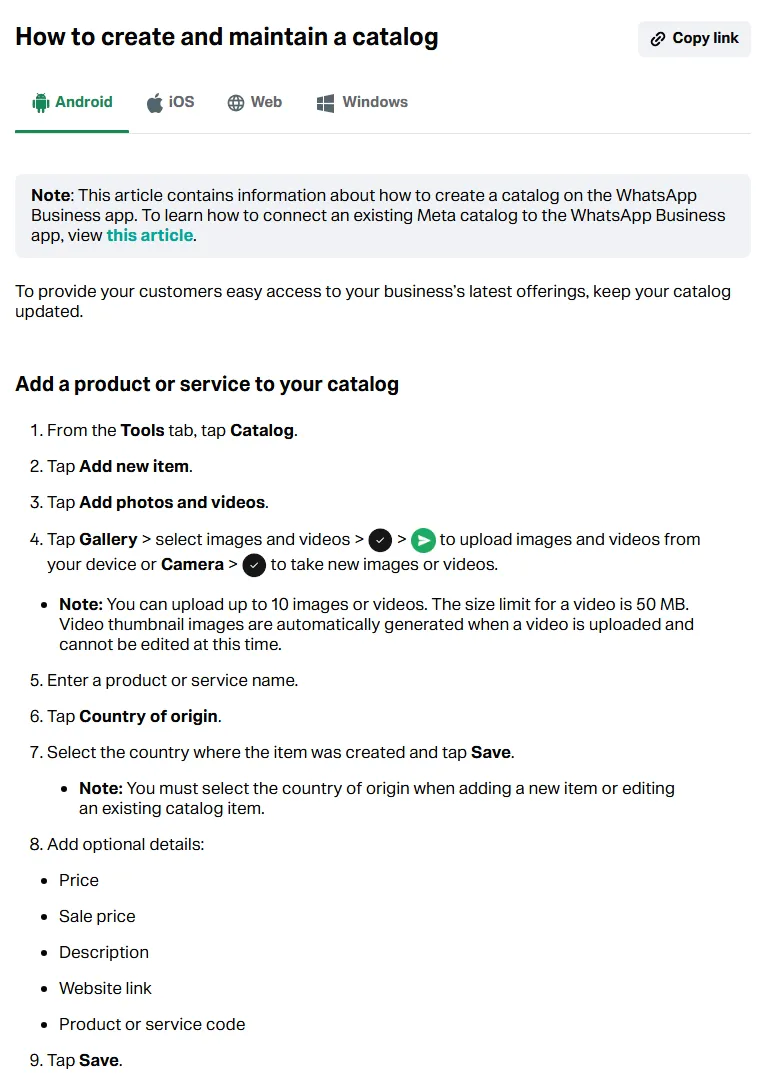
- Set up WhatsApp ordering. Most Pakistani customers already message restaurants on WhatsApp. In the WhatsApp Business app, go to Tools → Catalog → Add new item and add each dish with a photo, price and description, as WhatsApp's catalog guide shows. Items only appear after WhatsApp approves them. For higher volume, the WhatsApp Business API can send order confirmations automatically; see our WhatsApp Business API guide. Common mistake: taking orders as free text with no fixed prices, which leads to errors and disputes.
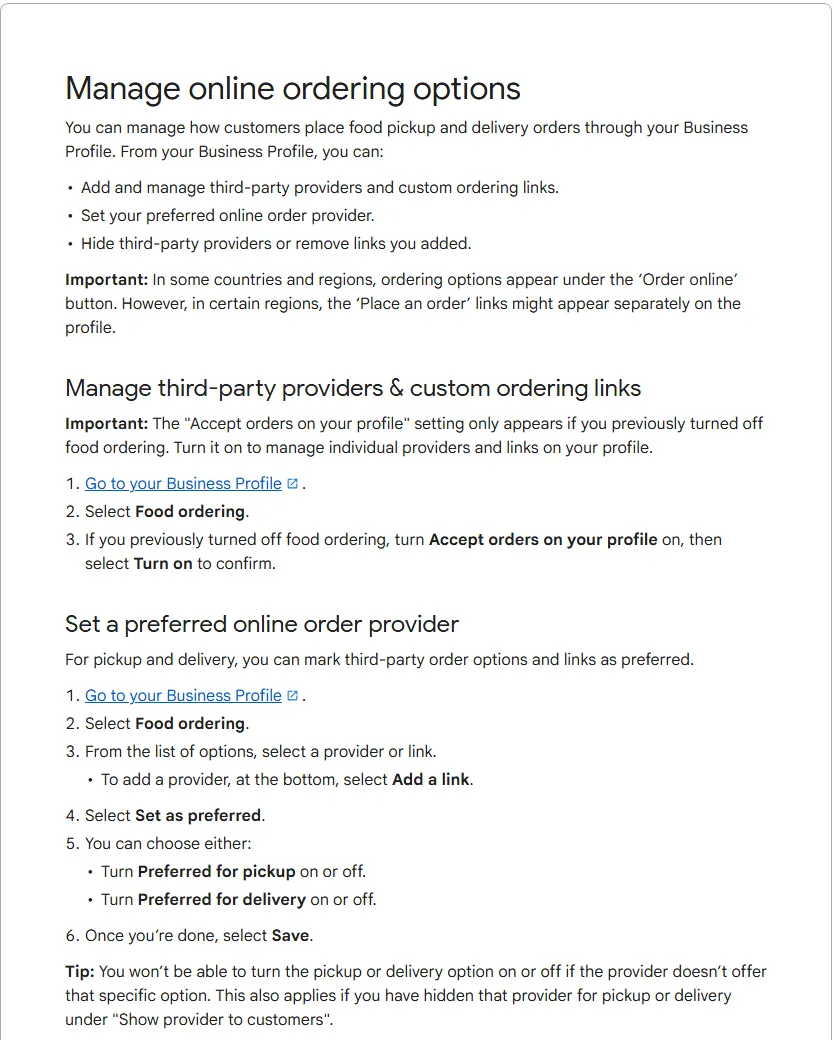
- Add your link to Google Business Profile. Customers searching your name on Google or Maps can see ordering options. Sign in at business.google.com, select Food ordering, choose Add a link, then select your link and Set as preferred for pickup and delivery. Google's help page says changes usually show within a few hours and that in some regions links appear under "Order online", in others as "Place an order". Done when: your own link shows first on your profile.
- Set the menu and delivery zones. Publish only dishes that travel well, with delivery prices and a minimum order per zone. Start with a radius your riders can cover hot, then widen it. Common mistake: copying the dine-in menu, including dishes that arrive soggy.
- Offer COD and digital wallets. Accept cash on delivery, plus JazzCash, Easypaisa, Raast or card payments through a gateway. Prepaid orders reduce fake orders and cash handling. Our payment gateway guide compares the options. Done when: a test payment lands in your merchant account and the order shows as paid.
- Connect orders to your POS and kitchen display. Orders from the website, WhatsApp and aggregators should land in one place, so the kitchen does not retype them. A kitchen display system (KDS) is a screen in the kitchen that shows orders in sequence. Connecting to your POS also keeps sales records in one system, which matters for larger restaurants that must report sales to FBR. Done when: a website order prints or appears in the kitchen without anyone touching it.
- Decide: own riders or third-party delivery. Own riders give you control over speed and food handling but are a fixed cost. Third-party rider services cost per delivery and suit lower volumes. Many restaurants start with pickup plus a small rider team for nearby zones. Done when: you know your cost per delivery in each zone.
- Bring customers back with loyalty and re-ordering. Save each customer's past orders so they can repeat them in one tap. Send a WhatsApp message only to customers who agreed to receive one, for example when a new deal launches. A simple stamp card ("every 6th order, free dessert") works. Done when: you can see how many direct customers ordered twice in 30 days.
Should you build a restaurant ordering app or use ready-made software?
Most single-branch restaurants should start with a ready-made ordering website or an open-source system, then build a custom restaurant ordering app only when repeat volume justifies it. Chains with several branches and loyalty plans get more from a custom app connected to their POS.
| Option | Good for | Watch out for |
|---|---|---|
| WhatsApp catalog only | Small kitchens and home chefs starting out | Manual order taking; hard to scale at peak times |
| Hosted ordering software (monthly fee) | Single branches that want to launch fast | Per-order fees, payment gateway support in Pakistan, who owns the customer list |
| Open-source system, self-hosted | Restaurants with a developer or agency | You pay for setup, hosting, updates and security |
| Custom website plus app | Chains with loyalty, multiple branches and POS links | Higher upfront cost; needs a maintenance plan |
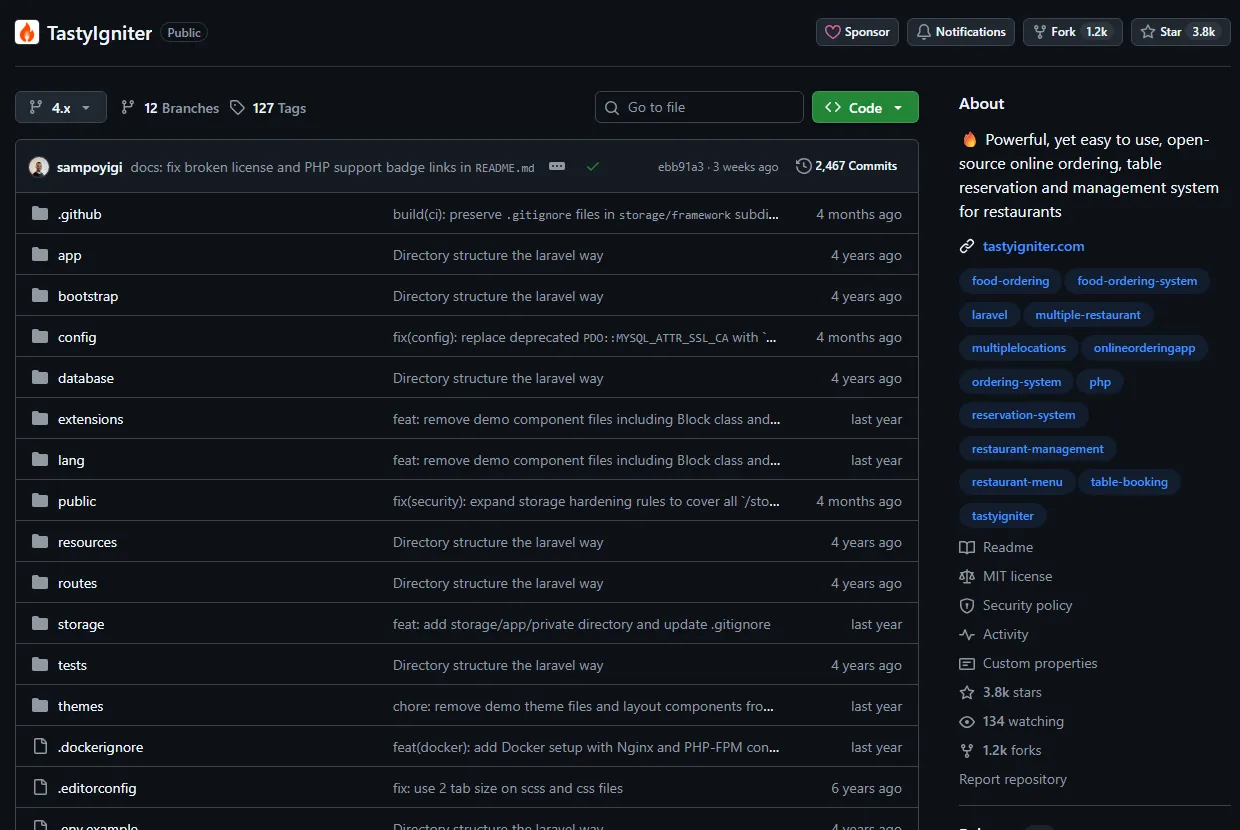
One open-source example is TastyIgniter, a Laravel-based online ordering, table reservation and management system released under the MIT licence. Open source means the code is free to use and change, but someone still has to install, host, secure and update it.
If you go the custom route, our guide to app development cost in Pakistan shows how to scope and price it.
How do margins compare: aggregator order vs direct order?
A direct order usually keeps more of the order value, but only if your delivery, payment and marketing costs per order stay below the commission. Run the numbers with your own figures before moving volume.
The table below is a hypothetical example for a Rs 2,000 order. The 25% commission matches the average Dawn reported for foodpanda in 2025; every other figure is invented to show the method. Your contract, rider costs and fees will differ, and tax treatment of commission and fees should be confirmed with your tax adviser.
| Per order (hypothetical) | Aggregator order | Direct order |
|---|---|---|
| Order value | Rs 2,000 | Rs 2,000 |
| Commission (25%) | - Rs 500 | Rs 0 |
| Your share of a discount | - Rs 100 | - Rs 100 (your own loyalty offer) |
| Delivery (own rider or third party) | Included by platform | - Rs 150 |
| Payment fee (e.g. 1.5% on wallet or card) | Included by platform | - Rs 30 |
| Marketing to bring the order in | Rs 0 | - Rs 100 |
| Software and hosting share | Rs 0 | - Rs 40 |
| Left before food and staff costs | Rs 1,400 | Rs 1,580 |
In this example the direct order leaves Rs 180 more. Notice how quickly that gap closes if delivery costs rise or if you spend heavily on ads to win each order. Direct channels pay off most with repeat customers, because the marketing cost of a returning customer is close to zero.
What mistakes should restaurants avoid?
- Breaking your aggregator contract. Check exclusivity and price-parity clauses before promoting a cheaper direct price. Exclusivity was one of APRA's complaints in 2020.
- A slow ordering website. If the menu takes ages to load on 4G, customers go back to the app they know.
- No order confirmation. Every direct order should get an instant WhatsApp or SMS confirmation with an expected time.
- Messaging people who did not opt in. Ask permission before sending promotions on WhatsApp, and make it easy to stop.
- Separate systems for each channel. Retyping orders from WhatsApp into the POS causes mistakes and slows the kitchen.
- Measuring nothing. Track direct orders, repeat rate, average order value and delivery time each week.
A 30-day plan to launch your direct ordering channel
- Week 1: calculate your effective take rate from last month's statements. Read your aggregator contract. Pick 15 to 25 dishes that travel well.
- Week 2: set up the WhatsApp Business catalog and an ordering website or hosted ordering page. Open or confirm your payment gateway merchant account.
- Week 3: connect orders to your POS or kitchen screen. Test ten real orders with staff and friends, including COD and wallet payments.
- Week 4: add the link to Google Business Profile and set it as preferred. Print bag inserts and add the link to Instagram and Facebook. Start a simple loyalty offer for direct customers.
- Day 30: compare direct orders, repeat customers and margin per order against your aggregator orders, and decide what to scale.
How Digitt Hype can help
We build ordering websites, WhatsApp ordering flows and restaurant apps, and connect them to POS systems, as part of our work with restaurants. We can also set up your Google Business Profile ordering link and payment gateway. Contact us with your menu and current monthly order volume and we will suggest the smallest setup that fits.
Frequently asked questions
How much commission does foodpanda charge restaurants in Pakistan?
Rates are set per restaurant and are not published. A September 2025 Dawn report quoted an average commission of 25%, varying with order volume. A 2020 Dawn report said large chains negotiated far lower rates than small eateries. Check your own contract and payout statements for your exact rate and any extra deductions.
Should my restaurant leave foodpanda?
Usually not straight away. Aggregators bring new customers you would struggle to reach alone. A safer plan is to stay listed, build a direct channel (website, WhatsApp ordering and a Google ordering link), and move repeat customers to it over time, while respecting any exclusivity terms in your contract.
What is the cheapest way to start online food ordering?
Start with a WhatsApp Business catalog showing your menu with prices, plus a simple ordering web page linked from your Google Business Profile and Instagram. Add a payment option such as JazzCash or Easypaisa alongside cash on delivery. Move to dedicated ordering software or an app once direct orders grow.
Can I add an "Order online" button to my Google listing?
Yes. Sign in to your Business Profile, select Food ordering, then Add a link to your own ordering page and set it as preferred for pickup or delivery. Google says changes usually appear within a few hours, and in some regions links appear under "Order online" while in others they show as "Place an order".
Do I need my own riders for direct delivery?
Not always. Many restaurants start with pickup and a small rider team for nearby areas, or use a third-party rider service paid per delivery. Own riders give more control over speed and food quality but are a fixed monthly cost, so compare your cost per delivery in each zone first.
Will the Uber deal change foodpanda in Pakistan?
Uber agreed in July 2026 to buy Delivery Hero, foodpanda's parent, and the deal was reported to be expected to close in the second half of 2027, subject to approvals. As of November 2026, no changes to restaurant terms in Pakistan have been announced, so plan around your current contract.
Sources 8
- Dawn (Sept 2025): Changing habits reshape food delivery baskets
- Dawn (Sept 2020): Restaurants strike back
- Irish Times (16 July 2026): Uber agrees $14.8bn deal to buy Delivery Hero
- Nukta (July 2026): Uber to acquire foodpanda parent Delivery Hero
- ProPakistani (June 2025): Careem to rival foodpanda with new Everything App
- Google Business Profile Help: Manage online ordering options
- WhatsApp Help Center: How to create and maintain a catalog
- TastyIgniter on GitHub (MIT licence)
Numbers not matching your dashboard?
That gap is worth an hour of someone’s time. Tell us what you see and we will look at it with you.